|
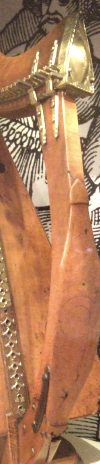
The Lamont harp
The Instruments section of this website presents my research projects which relate to Gaelic harps as physical objects.
Read more about the old instruments - stunning art objects from medieval, Renaissance and baroque Ireland and Scotland. More...
Old harps - the first and most comprehensive online catalogue of the surviving historic Gaelic harps. About 18 actual instruments, from medieval times up to the 18th century, are known to survive, preserved in museums and private collections. I started this major research project to catalogue and describe these old harps in 2004, and continue to update and improve it. More...
Depictions - this research project, started in 2010, aims to catalogue old images of Gaelic harps, from the early medieval stone sculptures through to engravings of the 18th century harpers. More...
Tuning keys - a research project gathering information about what the tuning keys used with the old harps were like. More...
Bags - a research project gathering information about the bags, cases or boxes used for storing and protecting the old harps. Started in 2013. More...
Stringing - an online paper discussing the history, theory and application of setting up and stringing a Gaelic harp. Originally written in 2004, with occasional additions and updates to 2009. More...
Modern replicas - Some shorter web pages discussing various aspects of modern recreations of the old harps. More...
Simon Chadwick

about this website
© Simon Chadwick
First published 26th November 2004.