
logo

Sources for Gaelic harp music

the Bunting manuscripts
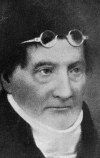
1792 - c.1843

Edward Bunting

Edward Bunting (1773-1843) collected music from the last of the old Gaelic harpers. In 1792 he was commissioned by the organisers of the Belfast Harpers' Meeting (commonly known now as the Belfast Harp Festival), to write down the old Irish tunes played by the harpers. He was so intruiged by the music played by these elderly harpers that he spent the rest of his life collecting tunes and information from them across Ireland.

Bunting's working method was to sit down with the harper and make a very rapid draft of the music into his pocket notebook as they played. Then later, he would transfer the tune into his desk notebook, tidying it up, and adding adding basic piano harmonisation and key signature etc. as he did so. The previous draft version would be crossed out in pencil. This procedure could be repeated until Bunting had worked out a romantic piano arrangement to his satisfaction.

Manuscripts

Most importantly, Bunting's manuscripts survive in Queens University Library, Belfast. The Bunting Collection there (catalogued as MS4: PDF handlist) consists of 59 manuscripts and printed books owned by Edward Bunting.

For detailed contents list of each manuscript, please see Collette Moloney's Index and Catalogue (below).

MS29

MS29 is Edward Bunting's first field notebook, and the most important of all the manuscripts. It contains quick notations of tunes as taken down from the harpers between 1792 and 1805. Many of the tunes are single melody lines but a significant number have bass markings as well.

MS29 is now available online at the Queens website

MS33(1)

MS33(1) is a field notebook. Most of it contains tunes collected on a tour of the North of Ireland with Patrick Lynch in 1802. Written upside down at the back are a number of draft notations aparrently taken from the playing of Patrick Quin c. 1800.

MS33(3) and MS33(2)

MS33(3) and MS33(2) are respectively volumes 1 and 2 of a pair titled Ancient and Modern Irish Music (not published)... for the harpsichord or pianoforte by E Bunting 1798. These are very spare keyboard arrangements which respect the ms29 drafts and seem to be an honest attempt to imitate the Gaelic harp style on the keyboards. Some of the tunes have extra information e.g. Gaelic titles, attributions to named harpers etc. It is my guess that this style of arranging was rejected by Bunting's publisher, since his next published work (1809) contains far more romantic arrangements set with romantic English lyrics commissioned for the book.

All six books of MS33 have been digitised by Queens University and are expected to be available during 2009.

Other mss

Other surviving manuscripts include more lushly worked out piano arrangements as well as fair copies of these arrangements which were sent to the publishers for the production of the printed books. There is also a very important series of Gaelic song manuscripts which were written down for Bunting by his secretaries Cody and Lynch, and assorted correspondence, journals and other texts.

Published Collections

Bunting's three published volumes of romatic piano arrangements (1796, 1809 & 1840) are fairly well known, having been reprinted in facsimile in 1969 and 2002. They each include an introduction, that in the 1840 volume being most interesting and useful, as it contains biographies of some of the harpers and explanations of some playing techniques. The music in these volumes is mostly selected from his manuscript notebooks, but the tunes are adjusted to fit with the newly composed basses and harmonies, suitable for performance on the pianoforte. This made them popular at the time (for example a number were plagiarised by Thomas Moore for his songs), but leaves them all but useless for the early harp student.

The Linen Hall Library 1997 edition

Edward Bunting
A General Collection of the Ancient Irish Music
Preston & Son, London, 1796
This book was Bunting's first published collection of some of the tunes which he had collected from the old Gaelic harpers. It contains a short preface and 66 tunes "adapted for the pianoforte", and hence of limited value to Gaelic harp students. The 1st edition was reprinted as a limited edition facsimile by the Linen Hall Library, Belfast in 1996. A different edition (there were a number of contemporary pirate rip-offs) is included in a facsimile reprint of all 3 of Bunting's volumes by Walton's of Dublin (1969, 2nd edition 2002).
Free PDF facsimile download from Seamus Taylor

Ancient Music of Ireland

Edward Bunting
A General Collection of the Ancient Music of Ireland
Clementi & Compy, London, 1809
Bunting's second pubished book contained a long preface and 77 tunes. The tunes are in romantic piano arrangements, some with specially written songs in English as was the fashion of the time. The preface is a historical overview of the evolution of the harp, and is only of antiquarian interest. Included in a reprint of all 3 of Bunting's volumes by Walton's of Dublin (1969, 2nd edition 2002).
Free PDF facsimile download from Seamus Taylor

The Ancient Music of Ireland, 1840

Edward Bunting
The Ancient Music of Ireland
Hodges and Smith, Dublin, 1840
This was the third and last of Bunting's publications. The introduction includes a history of the harp, biographies of important harpers, tables of various fingering and damping techniques used by each hand, tuning and nomenclature, and also commentary on some of the tunes with attempts to date them. The book contains many tunes, though they are of limited value as they are arranged for the pianoforte. Included in a reprint of all 3 of Bunting's volumes by Walton's of Dublin (1969, 2nd edition 2002); Available in facsimile from Dover Publications (2000).
Free PDF facsimile download from Seamus Taylor
 

Technical tables

Bunting and his correspondents also collected material on the techniques and terminologies used by the old harpers. The manuscript drafts of this material are fragmentary, but the information was published on pages 21-27 of the dissertation to the 1840 volume. Some have cast doubt on the reliability of the printed tables but in contrast to the tunes, this technical material does not seem to have been modified and is an essential resource for early Gaelic harp students. I have made an online edition of the tables.

Correspondence

MS35 is a series of letters written to Edward Bunting by Dr. James MacDonnell, who was closely involved with the project from the start and was an organiser of the 1792 meeting. The text of some of these letters has been published by C.M. Fox, "Annals of the Irish Harpers", 1911. Fox discovered the manuscripts in private hands 1907, and bequeathed them to Queens in 1916. She published "Annals of the Irish Harpers", a narrative acount of Bunting's work including extensive quotations from letters and papers in the mss. She also published some music from the mss in the Journal of the Irish Folk Song Society (of which she was in charge) from 1908 to 1910.

Annals of the Irish Harpers

Charlotte Milligan Fox
Annals of the Irish Harpers
Smith, Elder & Co, London 1911
Charlotte discovered the papers of Edward Bunting in an attic in 1907; in this book she published anecdotes, stories and historical documents from them, including documents relating to the 1792 Festival, the Memoirs of Arthur O'Neill, the Diary and Letters of Patrick Lynch, letters to Bunting from Dr. James MacDonnell. Also a biography of Bunting and six portraits.
Facsimile edition available to purchase: Click here for details

Portrait

The portrait of Bunting at the top of this page is from Fox's book. There is another portrait viewable online at the British National Portrait Gallery, and a third full-length portrait exists.

Biography

Bunting's Messiah

Roy Johnston
Bunting's Messiah
Belfast Natural History and Philosophical Society, 2003
A comprehensive and readable biography of Edward Bunting, which covers his whole musical life from his training and apprenticeship as a church organist, to his organisation of an important performance of Handel's Messiah in Belfast in 1813, and also his work with the harpers. This book provides the essential context for Bunting's collection of the ancient Irish music.
Available here from the Early Gaelic Harp Emporium. Click here to order your copy

Catalogue of the Manuscripts

Collete Moloney's book

Colette Moloney
The Irish Music Manuscripts of Edward Bunting (1773-1843): An Introduction and Catalogue
Irish Traditional Music Archive, 2000
This large and expensive volume is an heroic attempt to impose some order on the Bunting manuscripts in Queens University Belfast. Each manuscript is described and its contents listed in order with details of annotations and titles. Music incipits are also given (the first 4 bars of a tune) though these are poorly presented. There are extensive indices, which combined mean that a particular tune can easily be located in draft or arranged versions in various manuscripts, and Bunting's titles and notes compared. There is also a substantial introduction describing the manuscript collection and the music and song texts in it, but unfortunately although the technical descriptions of ink, handwriting, paper, and bindings is illuminating and useful, the musical discussion is seriously naive and often misleading - for example in the section on musical style and technique Ann Heymann's work is not mentioned; in discussing the instruments played by Bunting's informants there is no mention that a number of them survive in museums; and piano arrangements are accepted as being more honest representations of Gaelic harp idiom than the draft notations in ms29. Although irritating in many ways this is an indispensible book.

Modern Editions of the tunes

Donal O'Sullivan's book

Donal O'Sullivan
The Bunting Collection of Irish Folk Music and Songs
Journal of the Irish Folk Song Society, 1927-39
Each tune in the first two (1796 and 1809) of Bunting's published volumes is here given as a transcription of the melody taken from Bunting's manuscripts, and notes on who and where Bunting obtained it from, parallels, other sources, and also includes words to all the songs along with English translation. A useful resource for the scholar as well as for the Gaelic harp student. The work was published serially in the Journal of the Irish Folk Song Society between 1927 and 39. Facsimile reprint by Dawson & sons, London, 1967.

Donal O'Sullivan & M. Ó Súilleabháin's book

Donal O'Sullivan with Mícheál Ó Súilleabháin
Bunting's Ancient Music of Ireland edited from the original manuscripts
Cork University Press, 1983
Donal never completed his work on Bunting's third published volume (1840), so after his death the material he had compiled was edited and completed by Mícheál Ó Súilleabháin. The notes are almost inevitably less full, and there are fewer lyrics, but Mícheál has made a point to include discussion of a few of the harp basses, which were overlooked by Donal.
Occasionally available for sale secondhand

Simon Chadwick
